


Why Choose Us
Rich Qualifications
Tianjin Anguyuan metal products Co., Ltd. was established in 2007 October,have over 17 years of industry experience.
Scientific Management
Orderly management ensures that there are few errors in the production of product lines.
Innovative Technology
Continuously upgrading and innovating our products through time iteration to meet customer needs.
A Full Range Of Customer Service
Full process service to meet customer needs.

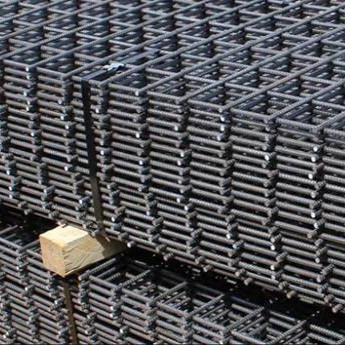
Steel bar welding mesh is a network of steel bar products welded in the factory, which is longitudinal and transverse steel bars arranged at a certain distance and at right angles to each other, and all crossing points are welded together with strong resistance pressure.

The concept of welded steel fabric/ mesh was first proposed in 1901, while the first major application was in 1908. In 1922, it was tested to be the sufficiently suitable material for roads of heavy traffic.

The concept of welded steel fabric/ mesh was first proposed in 1901, while the first major application was in 1908. In 1922, it was tested to be the sufficiently suitable material for roads of heavy traffic.

Welded Wire Reinforcement Mesh
Welded reinforcement concrete mesh is one heavy type welded wire mesh products, widely used in concrete, construction and buildings. Cracks in concrete reinforcing products or soft ground is used for the purpose of reinforcing the foundation.

Welded Plain Wire Reinforcement
Welded wire reinforcement (construction mesh) is an efficient and economical replacement for rebar as reinforcement in concrete construction.

The concept of welded steel fabric/ mesh was first proposed in 1901, while the first major application was in 1908. In 1922, it was tested to be the sufficiently suitable material for roads of heavy traffic.

Welded wire mesh is constructed from rigid wires welded at every intersection to provide a very stable and uniform surface.

Standard steel FabricThis reliable and robust concrete fabric mesh by ROM is ideal for security on building projects. It is a high quality steel reinforcement for cast concrete applications. It features squared ends to improve handling and safety.

Steel mesh is used in beam and column floor, roof, wall, concrete pavement, bridge deck pavement, airport runway, tunnel lining, box culverts, dock floor, prefabricated components and other fields of industrial and civil housing.
Welded wire mesh, or welded wire fabric, or "weldmesh" is an electric fusion welded prefabricated joined grid consisting of a series of parallel longitudinal wires with accurate spacing welded to cross wires at the required spacing. Machines are used to produce the mesh with precise dimensional control.
Benefits of Using Welded Mesh Fabric in Construction Projects
Increased Structural Integrity and Strength
When it comes to construction, structural integrity is paramount. Welded wire fabric provides a significant boost to the strength and stability of concrete structures. By reinforcing the concrete, it effectively distributes the load, minimizing the risk of cracks and failures. The evenly spaced wires in the fabric act as a framework, preventing the concrete from shifting or collapsing under pressure. This added strength ensures that your construction projects can withstand heavy loads and adverse conditions, giving you peace of mind and long-lasting structures.
Improved Crack Control and Durability
Cracks in concrete can be a major headache for construction professionals. They not only compromise the aesthetics of the structure but also weaken its overall integrity. Welded wire fabric offers a solution to this common problem by improving crack control and durability.
Cost-Effective Solution for Reinforcement
Construction projects often come with tight budgets, and finding cost-effective solutions is crucial. Welded wire fabric proves to be a cost-saving alternative to traditional reinforcement methods.
Time-Saving Installation Process
Time is of the essence in construction projects, and any opportunity to save time is invaluable. Welded wire fabric provides a time-saving installation process, enabling you to complete your projects more efficiently.
Versatility and Adaptability in Various Construction Applications
One of the key advantages of welded wire fabric is its versatility and adaptability in various construction applications. From residential buildings to infrastructure projects, this remarkable material can be used in a wide range of construction scenarios.
Enhanced Safety and Security
Safety is a top priority in the construction industry, and welded wire fabric contributes to creating safer and more secure structures. By reinforcing the concrete, it helps to prevent structural failures and accidents, ensuring the safety of occupants and workers.
Resistance to Corrosion and Weathering
Exposure to the elements can take a toll on construction materials, leading to corrosion and weathering. Welded wire fabric offers resistance to these environmental factors, prolonging the lifespan of your structures.
Sustainability and Eco-Friendly Characteristics
In today's environmentally conscious world, sustainable construction practices are highly valued. Welded wire fabric aligns with these principles, offering eco-friendly characteristics that contribute to a greener construction industry.
Advantages of Welded Mesh Fabric
Good Anti-cracking Performance
It can prevent cracks in wall and floor slabs. This is because when a wall or floor slab shrinks or is pulled, the steel resists these tensile stresses. They distribute them evenly over a large area, helping them to hold tightly together and thus minimize cracks.
Higher Strength
Compared to manually assembled rebar, this welded wire mesh made of high-quality low-carbon iron wire welded by the machine is much stronger. The mesh stays where you place it and adheres well to the concrete.
Economical and Practical
The economy is a very important advantage of it. This is because there is no need to cut rebar, mark, and space it when using Welded Mesh Fabric. In addition, you do not need to laboriously tie the ties. This means less reliance on on-site manpower, which saves a lot of labor and time.
No Need for Frequent Maintenance
Using a Welded Mesh Fabric can in a sense eliminate some of the maintenance work and inspections you have to perform. This is because it always stays in good condition. Besides, it minimizes cracks, making it a good choice for concrete reinforcement.
Easy Handling and Placement
It can be supplied not only in sheet form. In the case of welding wire cloth made from finer wire, it can be supplied in long rolls. This makes it easier to transport and handle. In addition, it will be more space-saving when stored.
Avoiding Steel Waste
It is also quick and easy to lay. When using it, you can change the rebar size and spacing. You can reduce steel waste by providing the exact rebar size where it is needed.
The Importance Of Welded Mesh Fabric



Crack control: By adding welded wire fabric reinforcement within a slab, it will prevent cracks from forming and opening up farther. The cracks can be a result of shrinkage during the drying process, or due to heavy loads that are externally applied. But by keeping cracks tight or preventing them from opening at all, you will not have to worry about faulting or failure of the slab due to cracking. This is one of the most important benefits of the use of welded wire fabric.
Curling restraint: By reinforcing the upper half of the concrete slab, you can restrict concrete shrinkage that might otherwise occur. By restraining shrinkage in that upper slab, curling will be reduced. The closer you place the steel to the top of the slab and the more area the steel covers, the more curling will be restrained and reduced.
Greater structural strength after cracking: If overloading occurs on the slab to the point that it starts to crack, the reinforcing steel fabric will provide extra strength even when those structural cracks form, giving extra capacity and preventing total failure of the slab.
Allowance of increased joint spacing: The spacing of construction and control joints can get wider when you use reinforcement methods like welded wire fabric. The increase in spacing could be small, or it could be rather significant, depending on the way you've designed the system and on the intended slab performance.
Greater impact resistance: Numerous studies have shown that the use of welded wire fabric and other forms of steel reinforcement in concrete slabs increases a slab's impact resistance. Reinforcement cuts down on the strains that would otherwise be caused by the impact, preventing premature cracking and improving the structural strength in the slab even if cracking does occur.
Reduced maintenance: Welded wire fabric cuts down on the amount of slab and joint maintenance you'll need to perform to keep it in good condition. This is because it also cuts down on curling and better maintains cracks, which removes some of the maintenance tasks and inspections you'd have to perform.
Allows use of shrinkage compensating concrete: Shrinkage compensating concrete has a variety of benefits of its own, but it cannot be used without reinforcing steel. This means welded wire fabric opens up additional possibilities for you with regard to the types of concrete applications you can use.
Key Factors That Are Affecting The Age Of Welded Mesh Fabric
Quality of Material: The Welded Mesh Fabric will run for more time if it does not get rust or corrosion. We have to always select high-quality material to produce wire welded wire fences to protect from corrosion. There are several materials like hot–dipped, stainless steel, mild steel, and vinyl or epoxy coating wire which are used to produce a high-quality welded wire fence.
Types of Coating: The wire or material selection depends on whether condition. Sometimes we need a good quality fence at a competitive price. The material that is cost competitive is not appropriate for the weather conditions. In this case, we do the coating on wire and make it the perfect solution for weather conditions. The coating types are Galvanized or Hot-dipped galvanized, epoxy coated, vinyl coating, etc. We applied an extra layer of wire which protects the inner wire from weather conditions.
Weather Conditions: Before selecting a suitable Welded Mesh Fabric, we should identify the environmental conditions where we are going to use or install a fence. This factor plays a vital role in fence durability. The measuring factors to identify the environmental conditions are humidity, temperature, rain ratio, water or chemical interaction etc.
Guidelines for fence Installation: Installation technique is a crucial factor for fence longevity. The Welded Mesh Fabric which is installed properly with accessories like Tension wire, line wire, binding wire, Post and pole, and accurate concrete base will increase the life of the fence and less maintenance.
Maintenance guidelines: Welded Mesh Fabric an inspection from time to time because we cannot predict the natural condition. If there is any maintenance or repair required, it should be done ASAP. This process can significantly extend the lifespan of a Welded Mesh Fabric.
Our Factory
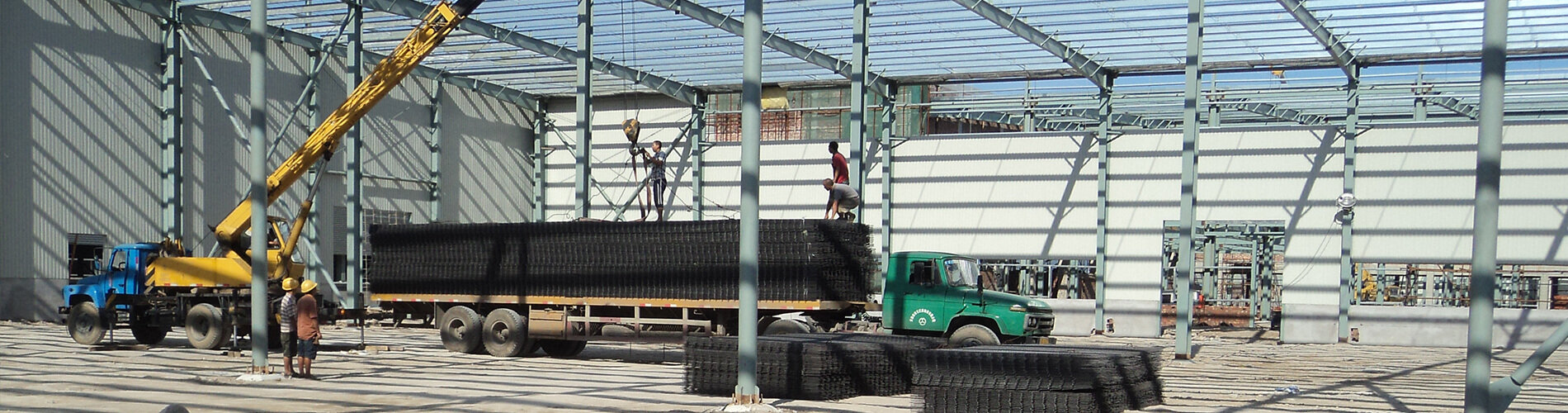
Products are widely used in industrial and civil construction, such as: high speed railway, bridge, highway, subway, tunnel, factory, Ping, airport, dam, slope protection, concrete precast slab and wall, commercial buildings, stadiums, guardrail etc.
FAQ
Q: What is Welded Mesh Fabric?
Q: How is Welded Mesh Fabric made?
Q: What are the common uses of Welded Mesh Fabric?
Q: What materials are used to make Welded Mesh Fabric?
Q: Why is Welded Mesh Fabric preferred over other types of mesh?
Q: What is the purpose of welded mesh?
Q: What is the difference between Welded Mesh Fabric and Woven Wire Mesh?
Q: What is the standard sheet size of mesh welded fabric?
Q: What are the benefits of using Galvanized Welded Mesh Fabric?
Q: Is Welded Mesh Fabric suitable for DIY projects?
Q: How do you bend welded mesh?
Q: What gauge is welded wire mesh?
Q: How does Welded Mesh Fabric compare to Chain-Link Fencing?
Q: Is Welded Mesh Fabric safe for animals?
Q: How does Welded Mesh Fabric perform in extreme weather conditions?
Q: How do you measure welded wire mesh?
Q: How does Welded Mesh Fabric contribute to the aesthetics of a property?
Q: Can Welded Mesh Fabric be cut to size?
Q: How does Welded Mesh Fabric compare to Plastic Mesh in terms of durability?
Q: Is Welded Mesh Fabric suitable for use in marine environments?
Hot Tags: welded mesh fabric, China welded mesh fabric manufacturers, suppliers, factory, woven wire mesh, flying end fabric, cut and bent fabric, iron wire mesh, steel wire mesh roll, protective wire mesh


