


Why Choose Us
Rich Qualifications
Tianjin Anguyuan metal products Co., Ltd. was established in 2007 October,have over 17 years of industry experience.
Scientific Management
Orderly management ensures that there are few errors in the production of product lines.
Innovative Technology
Continuously upgrading and innovating our products through time iteration to meet customer needs.
A Full Range Of Customer Service
Full process service to meet customer needs.

Wire mesh fences are the perfect fencing solution for security and privacy. Wire mesh fence is consist of wire mesh panel, post, which make the fence easily to install. Welded Mesh fences have excellent anti corrosion coating to ensure a long time use, also are various in design and color, beautiful and generous, and can be agreed with the local environment and landscape according to the color deployment.

Wire mesh fences are the perfect fencing solution for security and privacy. Wire mesh fence is consist of wire mesh panel, post, which make the fence easily to install. Welded Mesh fences have excellent anti corrosion coating to ensure a long time use, also are various in design and color, beautiful and generous, and can be agreed with the local environment and landscape according to the color deployment.

Steel wire mesh sheets are the perfect fencing solution for security and privacy. Wire mesh fence is consist of wire mesh panel, post, which make the fence easily to install. Welded Mesh fences have excellent anti corrosion coating to ensure a long time use, also are various in design and color, beautiful and generous, and can be agreed with the local environment and landscape according to the color deployment.
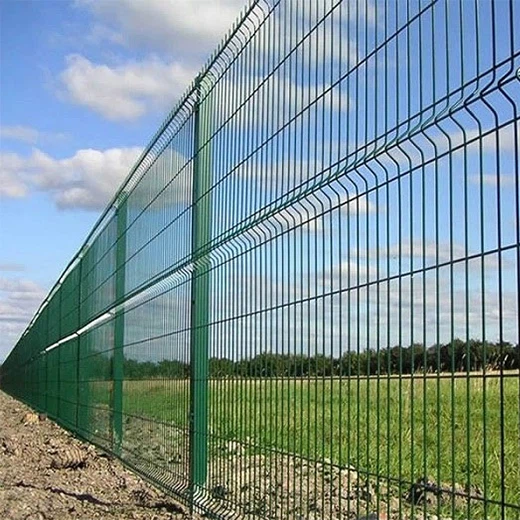
Coated welded wire fencing are the perfect fencing solution for security and privacy. Wire mesh fence is consist of wire mesh panel, post, which make the fence easily to install. Welded Mesh fences have excellent anti corrosion coating to ensure a long time use, also are various in design and color, beautiful and generous, and can be agreed with the local environment and landscape according to the color deployment.

Screen is used as a screen plate support body of the woven fabric, commonly known as silk mesh, silk screen, gauze, screen, etc. Screen printing commonly used screen are natural screen, synthetic screen, metal screen, special screen and so on. The performance of the screen such as material, mesh, opening, opening rate, etc., has a great impact on the transfer of screen printing ink, according to different copy of the original, select the right screen is the premise of obtaining high-quality screen printing copies.

Safety wire mesh are the perfect fencing solution for security and privacy. Wire mesh fence is consist of wire mesh panel, post, which make the fence easily to install. Welded Mesh fences have excellent anti corrosion coating to ensure a long time use, also are various in design and color, beautiful and generous, and can be agreed with the local environment and landscape according to the color deployment.

Thewire Mesh filter, referred to as the filter screen, is made of different mesh metal mesh processing, its role is to filter the molten material flow and increase the material flow resistance, so as to filter out mechanical impurities and improve the effect of mixing or plasticizing.
Protective wire mesh is a critical component in various industries, serving as a barrier to protect against a range of hazards. From safeguarding personnel and equipment to preventing the intrusion of animals and unauthorized access, wire mesh offers a robust solution.
How To Select The Right Type Of Protective Guard Netting For A Specific Application
Protective guard netting (also called "overhead guarding" and "safety netting") improves the safety of personnel and pedestrians in distribution centers, warehouses, and manufacturing facilities by preventing items from falling from heights. When properly installed, the netting retains products, totes, cases, boxes or pallets from falling off the back or sides of industrial steel storage rack; through the openings in guardrails positioned around the perimeter of mezzanines, elevated work platforms, pick modules or stairs; or from any conveyor. It can also be used to protect personnel from coming in to contact with mechanical or automated equipment while still providing visibility to the system's operation.
There are a variety of protective guard netting options. These include different construction materials (nylon, polyester, polypropylene, or polyethylene); thicknesses; tensile strengths; opening sizes; load ratings; and more. To help facility owners choose the right solution for their unique application, it's important to work with a qualified supplier. They will specify the most appropriate netting for an application based on the answers to the following questions:
With what equipment will the protective guard netting be used? Knowing the intended use of the netting will help to determine the most appropriate type, material, thickness and opening size. It will also aid in the selection of the type of fastener to be used, such as connectors provided by the supplier, industrial zip ties, snap-hooks, carabiners, or a cable system to accommodate for pallet offset.
What are the dimensions of the area where protective guard netting is required? The available space in the area requiring protection will impact the design and construction of the overall solution. Netting made of woven nylon or polyester materials will have a bound edge to increase the overall strength of the net and provide a point of attachment. Therefore, it is most often supplied in a custom size to meet the unique application's dimensions. Extruded polypropylene or polyethylene netting can be delivered in pre-cut dimensions or as a continuous roll of material that is trimmed on-site to match the required size during installation.
What are the characteristics or types of items with which the protective guard netting might come into contact? Minimum and maximum weight, dimensions, materials, and shapes are all factors in determining the most appropriate netting material and installation solution. Additionally, it is important to share details about items that are sharp, abrasive, irregularly shaped, or contain hazardous materials. Certain types of netting can be more easily "patched" if they are torn or cut; others are more difficult to repair if compromised.
In what type of environment will the protective guard netting be installed? Different types of netting material may be more ideally suited for indoor, outdoor and clean room environments, as well as in temperature conditions including ambient, cold storage, freezers, or extreme heat. Temperature and other environmental factors can affect the energy absorption and tensile strength properties of different netting materials.

The mesh is installed on the surface of the slope which needs to be cleaned of vegetation and unstable blocks. It is also necessary to clean up and regulate 1.5m of hill-side above the edge of the slope. The anchors at the top of the slope must be executed first. Boreholes 25.0 mm in diameter are performed using a hand drill. The anchors made of a ribbed reinforcement B500B (16.0 mm in diameter, with a hook end) must be installed in the borehole. The anchors need to be a minimum length of 80 cm (longer if necessary, depending on the quality of the rock mass). The hooks at the end of the anchor are turned from the edge of the slope so that they can accept the steel rope that is connected with the protective mesh. The anchors are installed at distances of 1.50 m. It is necessary to ensure that the surface of the slope is cleared, so the mesh can be set onto the substrate. Unfolding can be performed from the foot of the slope up or unwinding with a crown slope downwards.
After mesh installation, it is necessary to interlock the steel wire (diameter of 12.0 mm) below the installed anchors at the top of the slope (all along the slope where the mesh is installed) and make the transition over the steel wire rope. Steel wire rope is installed to secure the mesh to the entire width of the panel, not just on the anchor position. The assembled mesh panels are connected with galvanized rings, after the 4-5 panels are installed.
How to use the Protective Wire Mesh
The method of using the protective net varies depending on the type of protective net. Here are some common types of protective nets and how to use them
Active slope protection net: The construction technology requirements of the active slope protection net ensure that it can withstand the erosion of rainwater, which depends entirely on whether the depth of the drilling hole meets the requirements during installation. During the installation process, it is necessary to ensure the stability of the active slope protection net and its close connection with the foundation. The installation steps include using a small line to check the straightness of the installation, making local adjustments, ensuring that the curved sections are smooth and the straight sections are straight, and finally fixing them to the desired effect of the design drawings.
Safety net: Used to prevent workers or objects from falling from heights, and to avoid or reduce casualties from falling or falling objects. The safety net has an overall protective function for workers and working surfaces at heights. Its construction and use methods depend on the specific type of safety net and the installation guide.
Passive protection net: The installation of passive protection net includes anchor and base positioning, foundation pit excavation and concrete or anchor hole drilling, base and anchor installation, steel column and anchor rope installation and debugging, support rope installation and debugging, annular net laying and connection, grid laying and connection and other steps. During the construction process, it is necessary to use a total station to determine the anchor hole position and base orientation according to the design requirements of the construction drawings to ensure the construction quality.
Insect-proof net: The use of insect-proof nets needs to pay attention to full coverage to ensure that there is no opportunity for pests to invade. When using, the insect-proof net should be used throughout the entire covering process, and both sides should be pressed firmly with bricks or soil to prevent strong winds from blowing it open. Choose appropriate specifications and consider factors such as mesh size and color to ensure the insect-proof effect. After use, it should be cleaned, dried and stored in time to extend its service life.
Height Standard Of Protective Wire Mesh
The height standard of protective nets varies according to the application scenario, as follows
Highway and railway protective nets: Usually designed to prevent pedestrians and vehicles from entering, the height is generally between 1.6 meters and 6 meters. For example, the height of the protective net of the Beijing-Shanghai High-Speed Railway reaches 2.85 meters.
Sports field: In order to prevent athletes and spectators from crossing the fence, the height of the protective net of the sports field is usually between 4 meters and 6 meters, and the shortest is not less than 3 meters.
Municipal road isolation: The height of the guardrail net used in municipal road isolation is generally about 1.5 meters, which is designed to isolate vehicles and pedestrians traveling on the upper and lower roads.
Fences and breeding: The height of the guardrail nets used in factory areas, residential areas and other locations is usually between 1.8 meters and 2.2 meters, while the height of the guardrail nets used for animal breeding depends on the height of the animals being raised. For example, the height of the fence for chickens may be between 1.2 meters and 2 meters.
Green protection: The height of the guardrail net used in urban green belts is generally between 30 cm and 1.5 meters, and the specific height depends on its purpose and location.
Our Factory
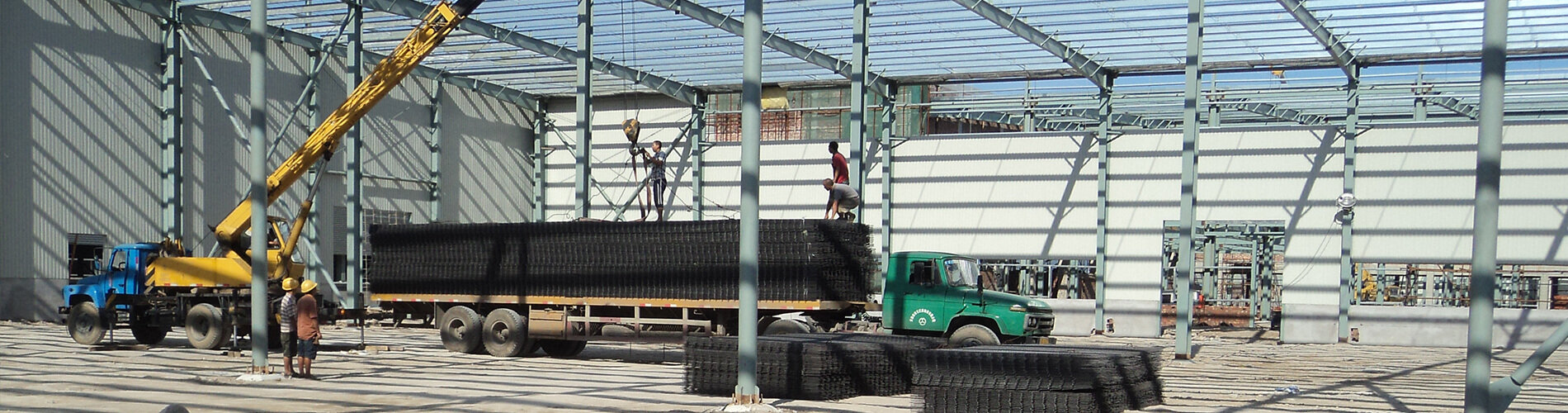
Products are widely used in industrial and civil construction, such as: high speed railway, bridge, highway, subway, tunnel, factory, Ping, airport, dam, slope protection, concrete precast slab and wall, commercial buildings, stadiums, guardrail etc.
FAQ
Q: What is protective mesh?
Q: What are the common materials used for protective wire mesh?
Q: What are the types of protective wire mesh available?
Q: What is wire mesh guard?
Q: How does protective wire mesh contribute to safety in industrial environments?
Q: Can protective wire mesh be customized?
Q: What is the advantage of using protective wire mesh in security applications?
Q: How is protective wire mesh installed?
Q: What are the maintenance requirements for protective wire mesh?
Q: Is protective wire mesh suitable for all environments?
Q: Can protective wire mesh be recycled?
Q: What is the lifespan of protective wire mesh?
Q: How does protective wire mesh prevent soil erosion?
Q: Is protective wire mesh effective for animal control?
Q: What safety precautions should be taken during the installation of protective wire mesh?
Q: Is protective wire mesh suitable for playgrounds?
Q: What is the role of protective wire mesh in public safety?
Q: How does protective wire mesh contribute to environmental protection?
Q: What are the considerations for selecting the right type of protective wire mesh?
Q: Can protective wire mesh be used in residential settings?
Hot Tags: protective wire mesh, China protective wire mesh manufacturers, suppliers, factory, steel wire mesh, welded wire fence, welded mesh fabric, concrete steel wire mesh, welded plain wire reinforcement, welded steel wire fabric


